
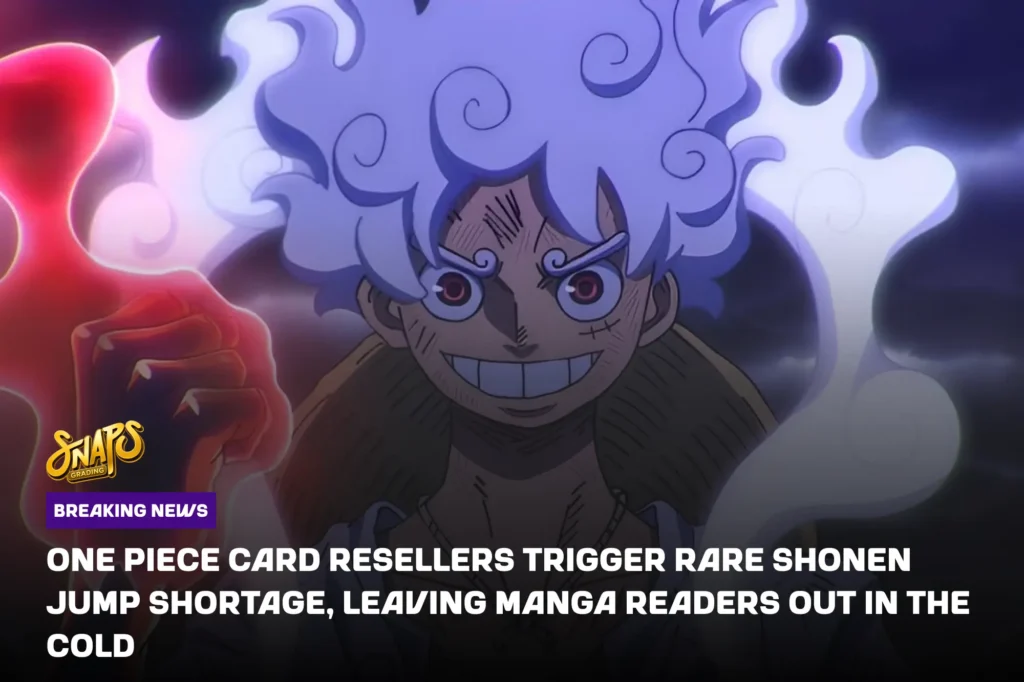
The intersection between traditional manga publishing and trading card speculation reached a boiling point across Japan, after card scalpers cleared out newsstands and bookstores for a single collectible card, leaving regular readers completely shut out.
The Cause: A Limited-Edition Luffy Promo
The issue in question—Weekly Shonen Jump Issue #33—featured an exclusive “29th Anniversary” One Piece Card Game promotional card depicting Monkey D. Luffy, with artwork illustrated by series creator Eiichiro Oda.
Retailing at its standard cover price of roughly 300 yen (~$2 USD), the magazine became an immediate target for resellers. Scalpers bought out entire stocks across convenience stores and bookstores to flip the promo card on secondary markets for upwards of $60. Photos quickly circulated online showing resellers loading car trunks full of pristine Jump magazines, discarding the print issues just to strip out the paper promo packs inside.
The Collateral Damage: Readers Miss the Blue Box Finale
While TCG shortages typically stay contained within hobby shops, this buyout directly hit everyday manga fans. Making matters worse, Issue #33 was a landmark release containing Chapter 250—the series finale of Kouji Miura’s highly popular sports-romance manga, Blue Box.
Dedicated readers who had followed the series for years arrived at stores only to find empty shelves. The backlash was severe enough that mangaka Kouji Miura issued a public apology to fans who were unable to read the print finale due to the sudden buyout.
Shueisha’s Response
Following widespread frustration from the readership, publisher Shueisha released an official statement apologizing for the shortage. To prevent similar disruptions, the publisher announced an immediate suspension of all One Piece Card Game promotional cards bundled in their magazines until further notice.
The incident serves as a stark reminder of the current TCG landscape: when card speculation spills over into everyday retail, it is often the core fans who pay the price.